Knowing what to document after a California car accident can make the next few days less confusing. A useful record explains what happened, identifies the people involved, and connects expenses to the collision. It does not require an argument at the roadside or a perfect account written while you are shaken. Start with safety, then preserve information in a clear, honest way. This guide offers general information about organizing records, not advice about fault or the value of a particular claim.
Start with safety and basic identification
Call emergency services when someone needs urgent help or the scene presents a danger. Follow law enforcement instructions, and avoid standing in traffic to take photographs. A damaged vehicle is not worth a second collision. If you cannot safely collect information, explain that later and record what you remember once you are in a safe place.
Separate observations from conclusions. “The other car entered the intersection from my left” is an observation. Guessing the driver’s speed or declaring a mechanical failure without evidence adds uncertainty. Accuracy is more useful than confidence.
Exchange and record the essential details
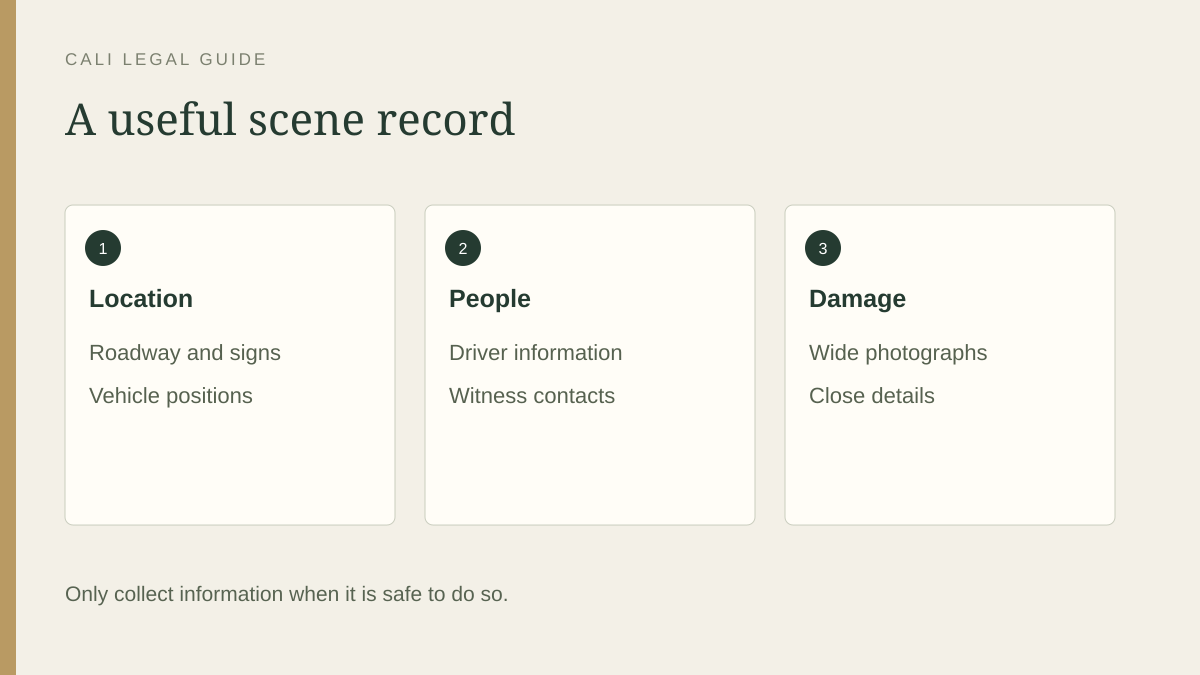
Collect the other driver’s name, contact information, insurance details, and vehicle identification information. Record the license plate and the vehicle’s make and model. If the driver is not the owner, note that distinction without assuming why. Keep information private rather than posting a driver’s license or insurance card online.
Write down the date, approximate time, location, direction of travel, and responding agency. Ask how to obtain an incident or collision report and retain the reference number. A report is one piece of the record; it does not replace your own photographs, receipts, or recollection.
Photograph the scene without creating a hazard
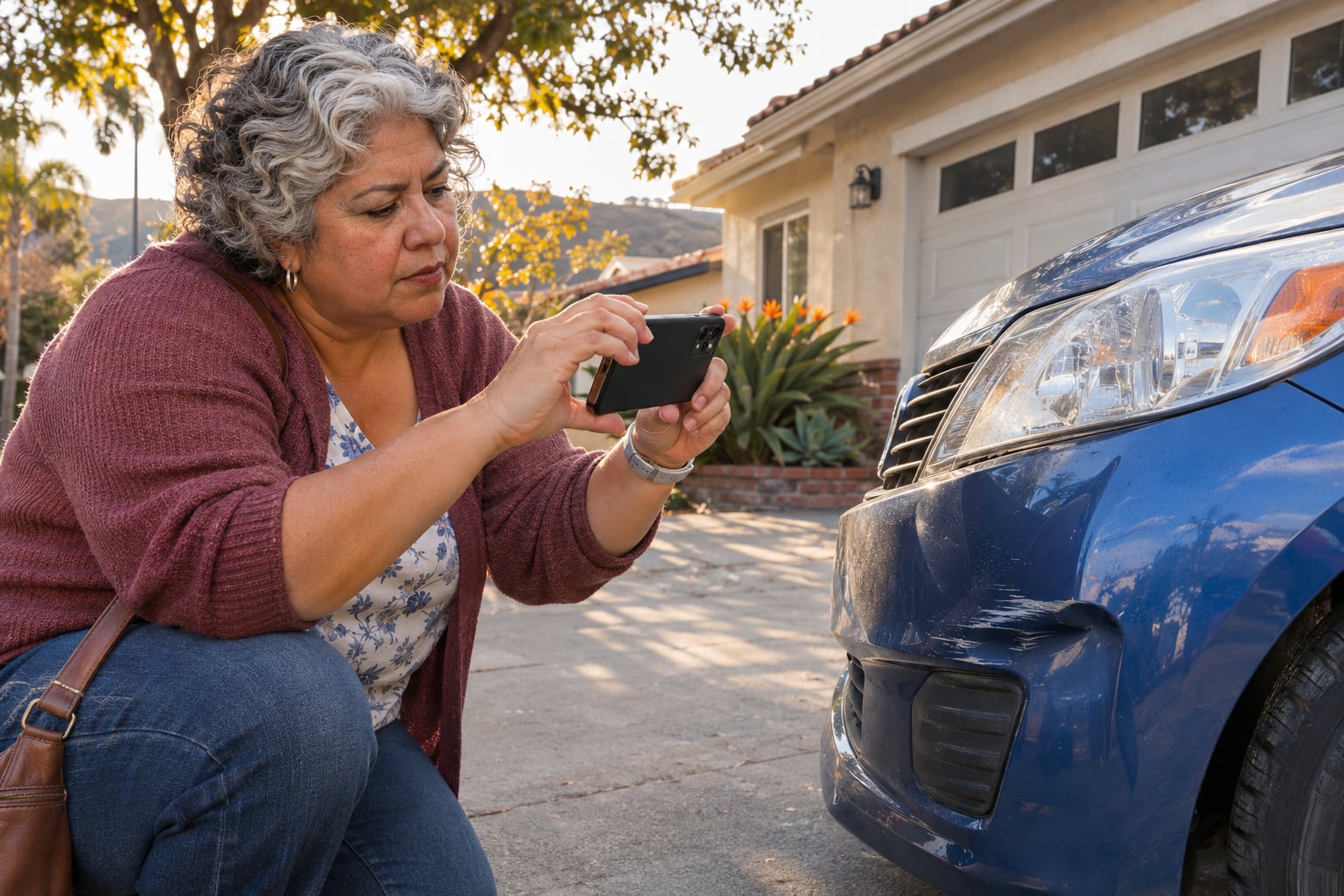
When safe, take both wide views and close views. Wide photographs can show the roadway, signs, markings, weather, and relative vehicle positions. Close photographs can show visible damage. Do not move objects to make the scene look clearer or more dramatic.
Save the original files. If you make a cropped copy to explain a detail, retain the unedited version too. Back up photographs somewhere you can access if your phone is lost. Note when a picture was taken after vehicles had already moved.
Ask witnesses for a reliable way to reach them
If someone saw the collision, ask for a name and preferred contact method. Briefly note where the person was standing or driving. Do not coach the witness or ask them to adopt your version of events.
Nearby businesses may have cameras, but footage can be overwritten. Record the location of a possible camera and raise preservation questions promptly with your insurer or attorney. Do not enter private property, demand access to someone’s account, or assume a business must hand over footage on request.
Build a record that remains useful after the scene
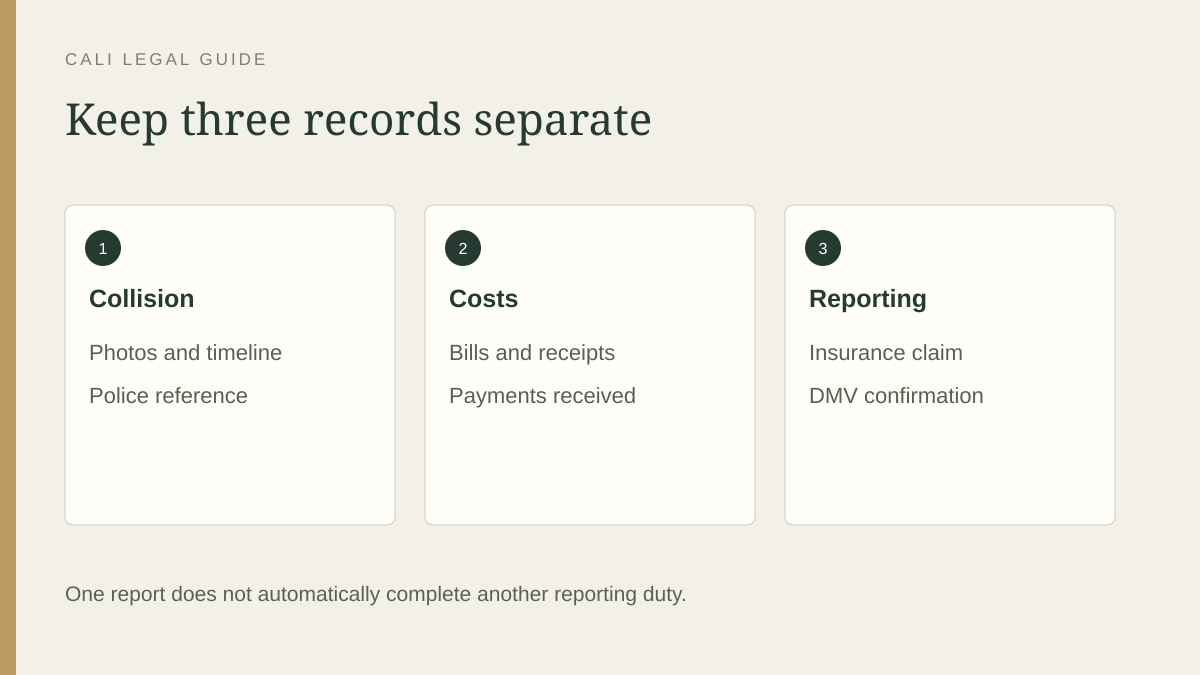
Create one folder for correspondence and a separate folder for supporting documents. A short timeline can connect an event to the relevant file. For example: “Tuesday: vehicle inspected; estimate received; file named repair-estimate-01.” This is easier to review than a large collection of screenshots with no dates or descriptions.
Use the same system for updates. Keep receipts even when you do not yet know whether a cost is covered. Recording an expense does not establish that someone owes it, but losing the receipt can make a later explanation harder.
Check reporting duties separately from insurance
The California DMV’s SR-1 instructions require a report within 10 days when a collision causes any injury or death, or more than $1,000 in property damage. This report is separate from a police report or an insurance claim. Do not assume another organization has completed it for you.
Confirm who is submitting the report and save evidence of submission. Report the collision to your insurer promptly under your policy requirements. Our California auto insurance claim guide explains how claim records and adjuster communications fit together.
Keep health and expense records factual
Seek appropriate medical care when needed, and describe symptoms honestly to the treating professional. Keep appointment information, bills, and relevant medical records. Do not diagnose yourself or delay care simply because a claim has not been opened.
For missed work, retain schedules, employer communications, and available wage documentation. Keep towing, storage, repair, and transportation receipts in their own section. Mark any reimbursement already received so the same expense is not accidentally presented as unpaid twice.
Review the record before making broad statements
An insurer may ask for information about the event, damage, and claimed losses. The California Department of Insurance’s auto coverage guide helps explain why different coverages may require different records. Ask who is requesting information and which claim it concerns.
Read documents before signing. If a question asks for something you do not know, say so. A first estimate or an early symptom description may change as more information becomes available. Explain genuine updates instead of altering older records. Our guide to property damage and bodily injury claims explains that distinction.
Protect originals and watch for separate deadlines
Keep original messages, original photographs, and a dated copy of each submission. A simple communication log should identify the person contacted, the subject, any requested document, and the next promised step. Follow up in writing when an important conversation leaves uncertainty.
Insurance discussions do not automatically resolve legal filing deadlines. Get qualified advice promptly if injuries are serious, a government vehicle may be involved, or responsibility is disputed. Explore the broader accidents and insurance guides for related starting points.