
California paid sick leave can help an illness or medical appointment become a manageable work issue. Yet the number on a paystub does not always tell the whole story. Your eligibility, available balance, daily schedule, and employer policy all matter. A useful starting point is to separate three questions: what time have you earned, what time may you use, and how will that time be paid? This guide explains the basic framework and a practical way to review your records.
Start With the California Paid Sick Leave Framework
California generally requires covered employers to allow at least 40 hours or five days of paid sick leave each year, whichever is greater. That distinction matters when a normal workday is longer or shorter than eight hours. Eligibility commonly involves working in California for the same employer for at least 30 days within a year, while use generally begins after 90 days of employment. Exemptions exist. The Labor Commissioner’s paid sick leave FAQ explains coverage and different plan designs.
Read the Policy Before Comparing Balances
Ask for the version of the policy covering the period you are checking. Note whether it uses a calendar year, an employment anniversary, or another defined year. Record whether leave builds gradually or is provided upfront. A policy label such as “PTO” does not explain every detail by itself.
Then compare the policy with your start date and work history. A coworker’s balance may differ because that person began earlier, worked different hours, or already used leave. Comparing your own documents usually produces a clearer question than comparing one isolated number with another person’s account.
Separate Earned, Available, and Used Time
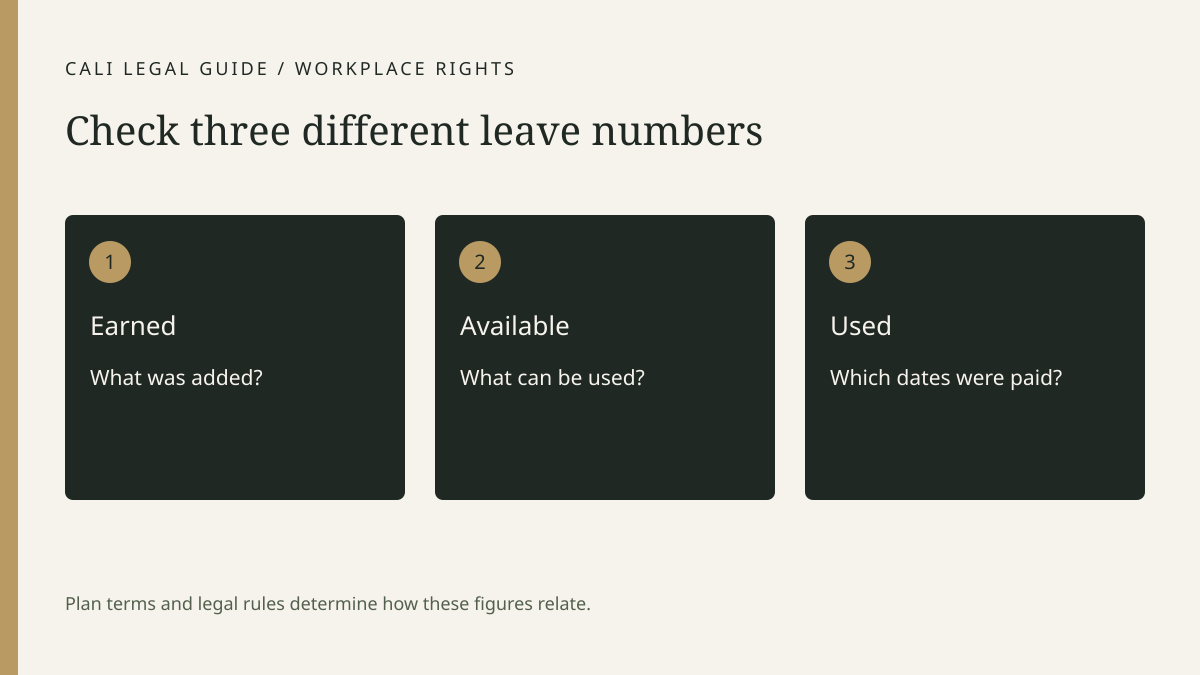
Create a simple three-column note: opening balance, additions, and time used. Add the dates beside each entry. If the payroll system displays more than one leave bank, keep them separate until you understand the labels. Do not assume vacation and sick leave follow identical rules.
For example, a portal might display a yearly allowance while a paystub shows the current available amount. That difference is a reason to ask payroll how the system works. It is not, on its own, proof that leave has disappeared or that either record is wrong.
Check the Length of Your Normal Workday
Write down the hours of your usual shift and any recent schedule change. A request for one day away may cover six, eight, or ten scheduled hours. Asking only “How many days do I have?” can hide that difference.
Keep a copy of the schedule that applied when you requested leave. If you work irregular shifts, list the actual scheduled dates and hours rather than estimating from an average week. This makes it easier to explain which time you asked to have covered.
Look for Local Rules and Other Leave Policies
City or county requirements may provide additional protections, and an employer may offer more generous benefits. Compare the location where you perform work, not just the company’s headquarters. Ask which local rules the employer considered.
Also distinguish payment for time away from other leave protections. A workplace may have separate policies covering family leave, disability-related requests, or other absences. Keep copies of each relevant policy rather than treating every absence as the same category. If several protections overlap, ask a qualified adviser to identify which requirements apply.
Make a Clear Request and Follow the Payment
A short, factual request helps create a usable record. Include the dates or hours you need, identify the leave category, and use the employer’s ordinary reporting channel when practical. Keep the confirmation or a written note of an oral request. The state accepts oral or written sick-leave requests; foreseeable leave calls for reasonable advance notice, while unexpected needs call for notice as soon as practicable. Consult the current state paid sick leave poster for covered uses and the general notice rules.
Review the Next Relevant Pay Statement
After the absence, compare the scheduled hours, approved time, leave balance, and payment shown. Mark the exact pay period you are reviewing. An absence date and a payday are different dates, so first make sure you are looking at the statement that covers the absence.
Our guide to reading California wage statements can help you separate pay-period figures from year-to-date totals. Save a complete statement rather than a cropped image showing only the disputed number. The surrounding labels often explain what that number means.
Ask Payroll a Specific Question
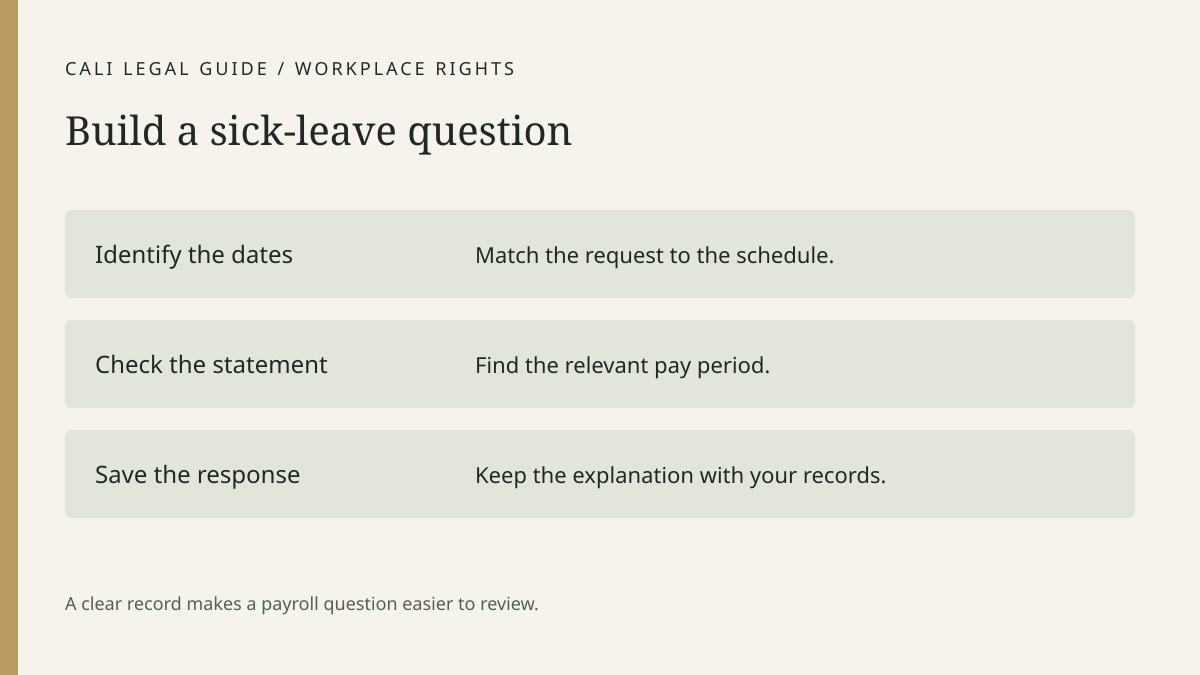
A useful message might say: “My scheduled shift on this date was eight hours. My request was approved, but this statement shows four sick hours. Please explain the calculation and whether a correction is planned.” Attach the relevant records without including unrelated medical information.
Keep the reply with the original question. If someone explains the problem by telephone, make a dated note of the person’s name and explanation. A clear record helps you see whether the issue was a missing entry, a balance question, or a disagreement about policy.
Keep Unresolved Issues Organized
If the explanation does not resolve the concern, build a short timeline instead of repeatedly sending the same documents. List the request, approval or denial, payroll entry, follow-up, and response. Keep the original files unchanged and make notes on separate copies.
For an unpaid amount, review our overview of filing a California wage claim and obtain guidance on deadlines. Explore our Workplace Rights archive for related questions. Do not assume that discussing the problem internally pauses a legal filing deadline.
This is general information, not legal advice. Rules, exceptions, and local requirements can affect a particular situation.