
California small claims court offers a simpler process for many money disputes. Simpler does not mean automatic, however. You still need to choose the right defendant, identify the proper court, explain the amount requested, and give the other side legally required notice. A little preparation can prevent confusion later.
This guide explains the main decisions before filing and the work that follows. It is general information, not a recommendation to sue. For an unusual claim, a deadline problem, or a dispute involving serious injuries, speak with a qualified attorney before choosing a court.
Decide whether small claims fits your dispute
Understand the main limits
According to California Courts’ small claims overview, individuals generally may seek up to $12,500, while businesses generally have a $6,250 limit. Special restrictions and exceptions can apply. Review the official guidance before relying on a dollar figure.
You generally present your own case at the initial small claims hearing, although you may consult a lawyer beforehand. The process also has limits on appeals. A plaintiff usually cannot appeal the decision on the plaintiff’s own claim. Winning does not mean the court will collect the money for you.
Turn the disagreement into a clear request
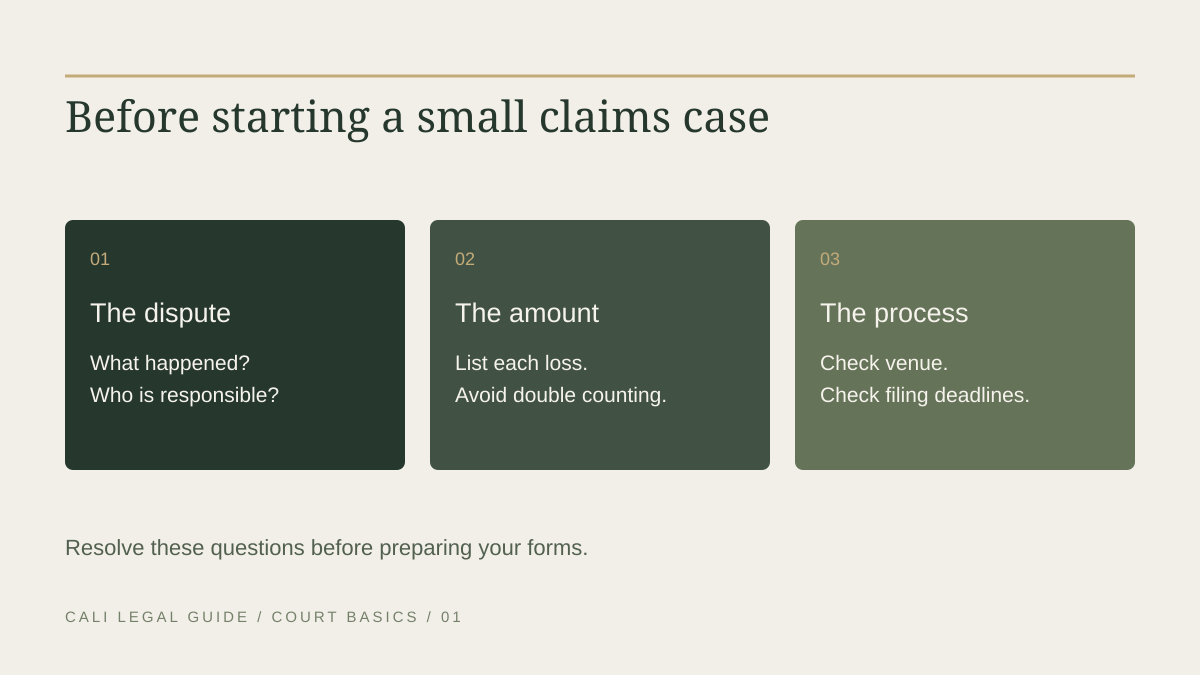
Write a short description of the problem without insults or speculation. Identify the agreement, what happened, and the financial loss you believe followed. Then separate amounts you can document from amounts you merely estimate. A receipt, invoice, or bank record may help explain a figure; a round number without context usually leaves more questions.
For example, a repair dispute may involve an original payment, a refund already received, and additional repair costs. List each separately. Do not add the same expense twice simply because it appears in several documents.
Identify the correct person or business
The name on a storefront may differ from the legal name of the business responsible for a contract. Review agreements, invoices, payment records, and business information before completing forms. A mistaken name can complicate service and enforcement.
Also determine whether special preliminary steps apply. Claims against public entities, for example, can involve an administrative claim and strict deadlines before a lawsuit. The official government-claim guidance explains why those cases need separate attention. A complaint email is not necessarily a valid government claim.
Check location, timing, and alternatives
The court closest to your home is not always the correct place to file. California Courts provides venue guidance based on the kind of dispute and its connection to a county. Use that resource and the local small claims advisor if the location is unclear.
Next, identify the applicable filing deadline. Different claims can have different limitation periods, and exceptions are fact specific. Do not assume that settlement discussions extend your time. Keep any written demand and response, and consider whether mediation could address the dispute without a trial.
Prepare the filing and follow the case through
Build a useful case file
Create one folder for forms and another for supporting records. Keep originals safe and work from copies where possible. A simple timeline can connect each important event with its evidence. Include dates, amounts, and the names of people involved, but avoid turning the timeline into a long argument.
Think about what the other side is likely to dispute. If you say a service was incomplete, identify what the contract required and what records show the missing work. Include relevant messages in context rather than isolated screenshots that could be misleading.
File the forms and plan for service
The standard starting form is the Plaintiff’s Claim and Order to Go to Small Claims Court, SC-100. The official forms directory explains related forms. Confirm local filing options and fees with the court. If paying fees would prevent you from meeting basic needs, review California court fee waiver options.
Filing is only one step. The defendant must also receive the papers through an allowed service method. Plan early, especially if an address or business representative is difficult to locate. Our small claims service guide explains the basic sequence.
Prepare for the hearing and what follows
Practice a short explanation of the request. Start with the agreement or event, then explain the problem and amount. Keep your most useful documents easy to find. Check whether the court requires evidence to be delivered in advance, particularly for remote hearings. Read our hearing preparation guide for an organizational approach.
After the hearing, read the written decision carefully. Note any deadlines and ask the small claims advisor about the next procedural step. If the court orders payment, keep a record of amounts paid and outstanding. If you are considering collection measures, use the proper process rather than threats or repeated personal pressure.
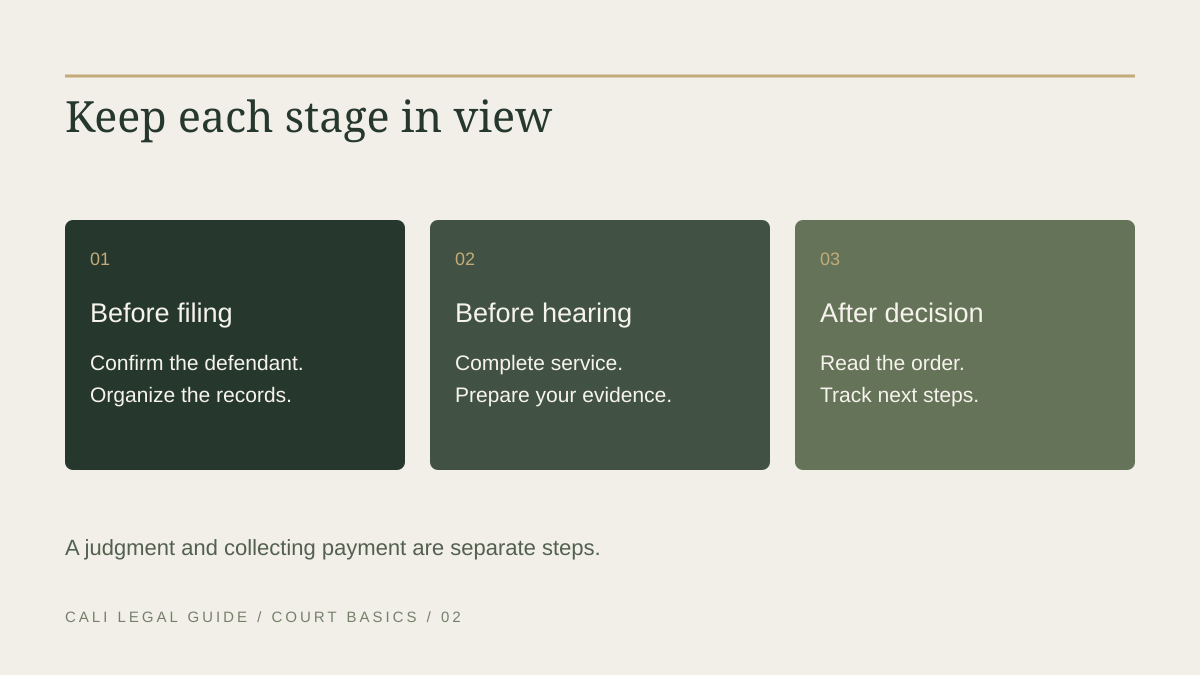
A useful small claims plan answers four questions: who is responsible, how much is supported, where the case belongs, and what must happen next. Recheck those answers before filing. You can explore related process guides in our Court Basics archive.