
California auto-renewal subscriptions can make everyday services convenient. They can also leave you paying for something you thought you had canceled. A streaming plan, delivery membership, or trial offer may keep renewing until you take the required step. Knowing which company bills you, what you accepted, and when you canceled makes a dispute easier to explain.
This guide separates the basic rules from a practical recordkeeping process. It does not promise that every cancellation creates a refund. The contract, enrollment method, timing, and applicable exceptions still matter. Start by finding the actual subscription agreement rather than relying only on a bank statement.
Understand the subscription before you cancel
Identify the agreement and the billing company
A brand name on your screen may differ from the merchant name on your statement. Check the original confirmation email, account page, and receipt. If an app store or another platform handled enrollment, identify that billing relationship too. Otherwise, you may contact a service provider that cannot manage the particular account.
The California Attorney General explains the state’s automatic-renewal protections. Covered businesses must obtain express affirmative consent and provide accessible cancellation methods. For online enrollment, consumers must be able to cancel online without steps that obstruct or delay immediate cancellation. Requirements and exceptions depend on the arrangement.
Keep the offer and acknowledgment together
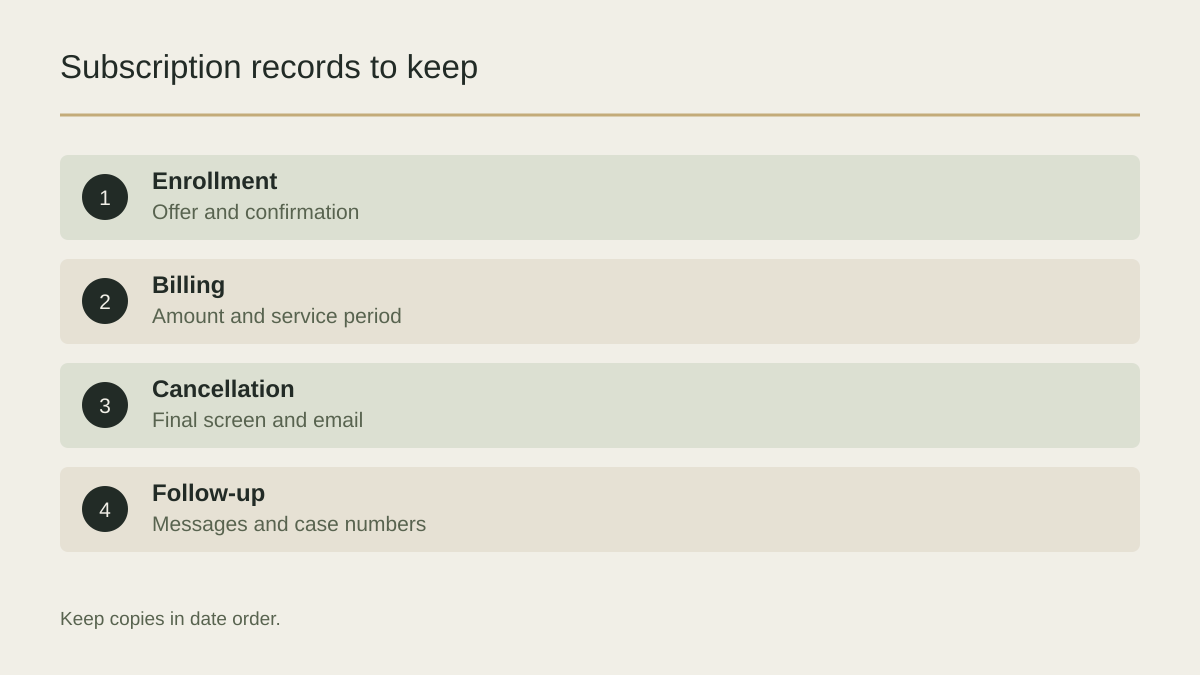
Save the page showing the recurring price, billing frequency, trial end, and cancellation terms. Add the receipt or acknowledgment you received after enrolling. If you cannot find a document, note what is missing and request it. Do not replace missing information with a guess about what the company probably offered.
A simple folder might contain the offer, enrollment confirmation, payment records, and later messages. Use filenames with dates. That small habit helps distinguish an old promotional price from a later price change.
Separate the renewal date from the payment date
The day money appears on a statement may not be the day a subscription renewed. A charge can post after the underlying transaction. Look for the service period and renewal notice as well as the bank entry. Put those dates on the same timeline before deciding which charge you dispute.
California rules include renewal and trial reminders for specified arrangements, as well as other notices. The Attorney General’s guidance describes the conditions. Do not assume every trial has the same reminder window or that a missing email automatically ends the contract.
Make the cancellation request unmistakable
Use the cancellation method shown for your account. Read each screen closely enough to tell cancellation apart from pausing, downgrading, or accepting a discount. If you want to stop renewal, your message can say that directly: identify the subscription and request confirmation of the cancellation’s effective date.
Capture the result, not just the first click
Save the final confirmation screen and any email that follows. If the process fails, record the date, device, and error message. A screenshot of a broken button tells a clearer story than a later statement that the website did not work.
When speaking with support, keep a short note of the date, representative, and reference number. Ask for written confirmation. Avoid sending unnecessary identification documents through an unverified email address or a link in an unexpected text message.
Respond to charges that continue after cancellation
Review the next statement and compare the charge with the cancellation record. A pending entry, final agreed payment, or separate subscription may need different treatment. Contact the merchant with a focused explanation. Include the account reference, disputed amount, cancellation date, and the outcome you seek.
For example, a useful message identifies the charge and attaches the cancellation confirmation. It asks the merchant to explain why the charge occurred. It does not need threats, unrelated complaints, or your full payment-card number. Keeping the request short also makes the company’s answer easier to evaluate.
Keep merchant complaints and payment disputes distinct
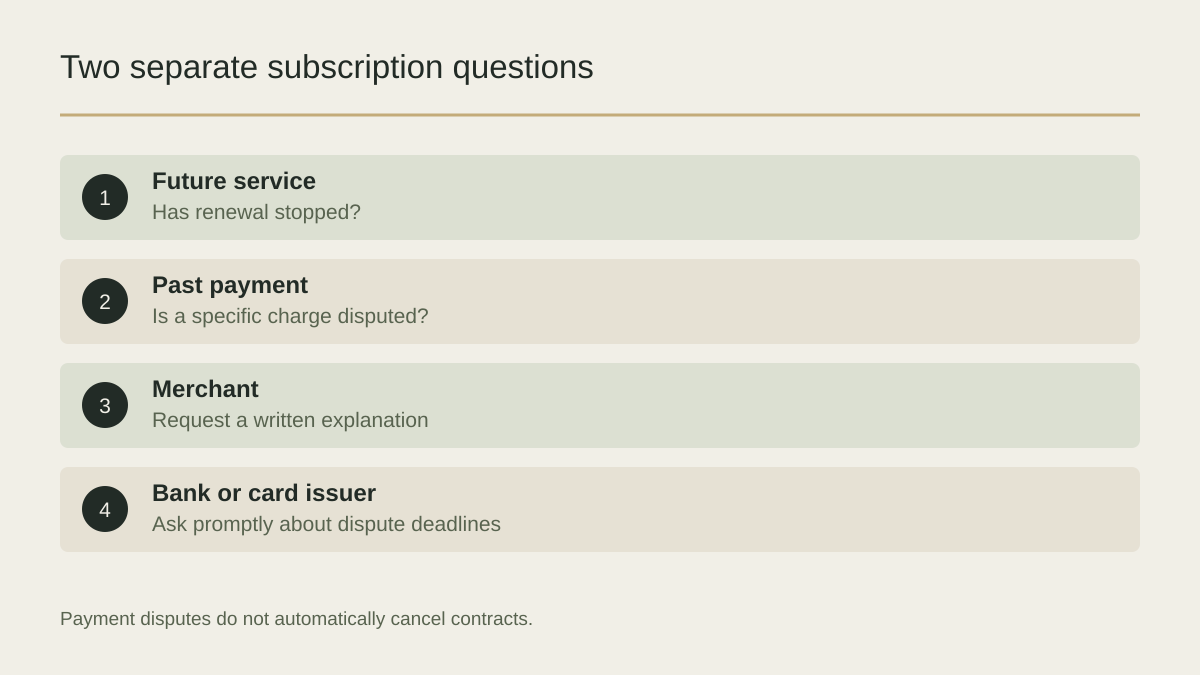
The FTC’s subscription guidance recommends keeping cancellation records and monitoring accounts. If unwanted charges continue, contact your card issuer or bank promptly about its dispute process. Deadlines and protections differ by payment method and circumstances. Do not wait for a prolonged merchant conversation before asking about those deadlines.
Stopping a payment method does not necessarily cancel the underlying agreement. Likewise, a merchant cancellation does not automatically resolve a charge already posted. Track these as separate requests. Write down whether you are asking to end future service, reverse a particular charge, or both.
Choose the next step using your records
If the company does not resolve the issue, consider a complaint to the appropriate consumer agency. Provide a clear chronology and copies of relevant records. Keep originals. A complaint can alert an agency to a problem, but it is not a guarantee of repayment or individual representation.
If the disagreement later appears on a credit report, see our guide to disputing credit report errors. If a collector contacts you, use our debt collector contact guide to understand why verification and separate response deadlines matter. Neither process should be treated as a substitute for the other.
For future subscriptions, make a short recurring-payment list and review it periodically. Include the billing provider, amount, renewal cycle, and account location. That list is easier to maintain than reconstructing several months of unfamiliar charges. Explore our Consumer Rights archive for related guides to contracts, purchases, and financial records.
General legal information, not advice about a particular contract or dispute.